
Complimentary Assessment & Feedback Session
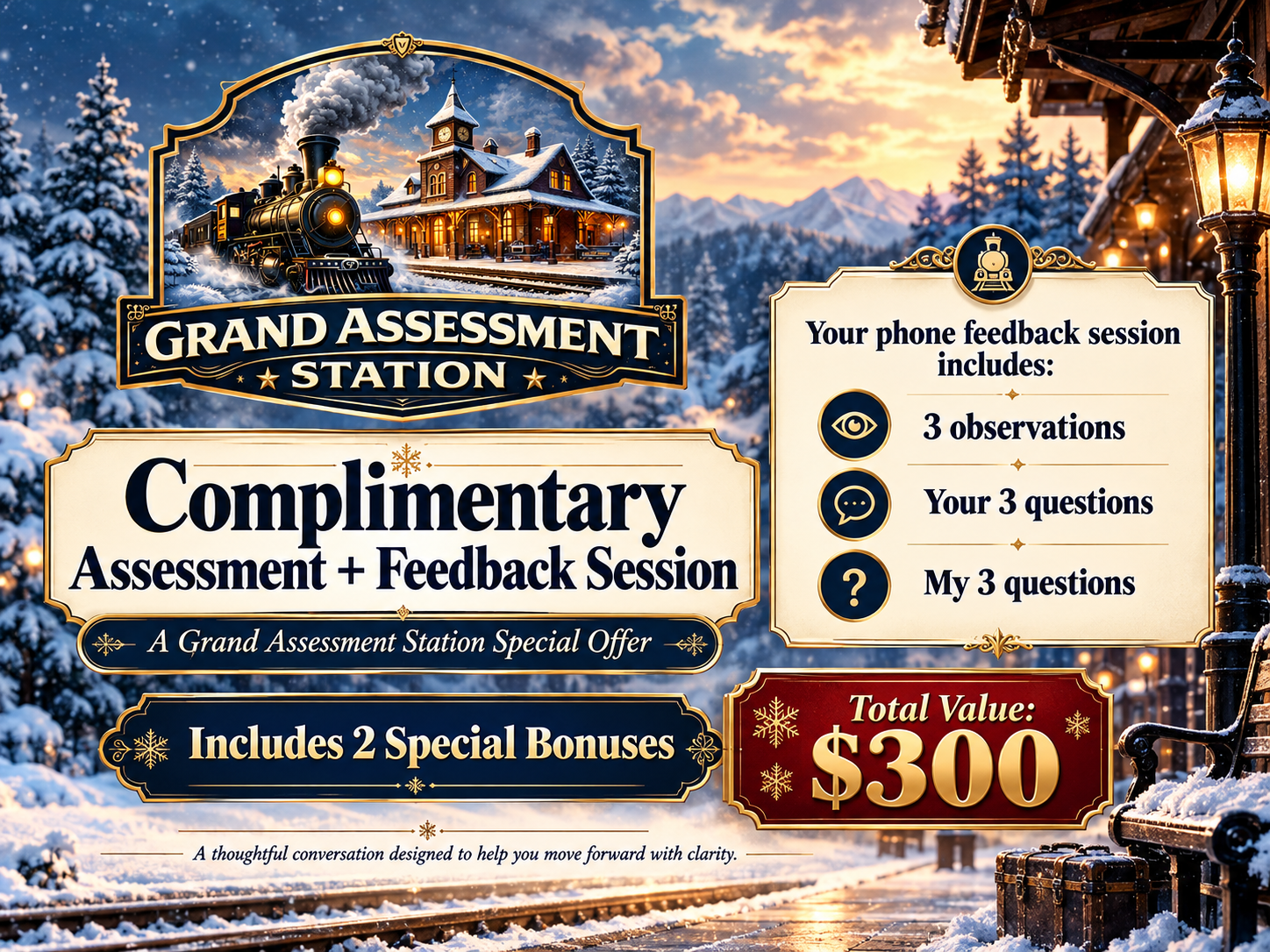
You Choose the Assessment!
Three Assessment Options
Open to Former, Current, and Potential Clients
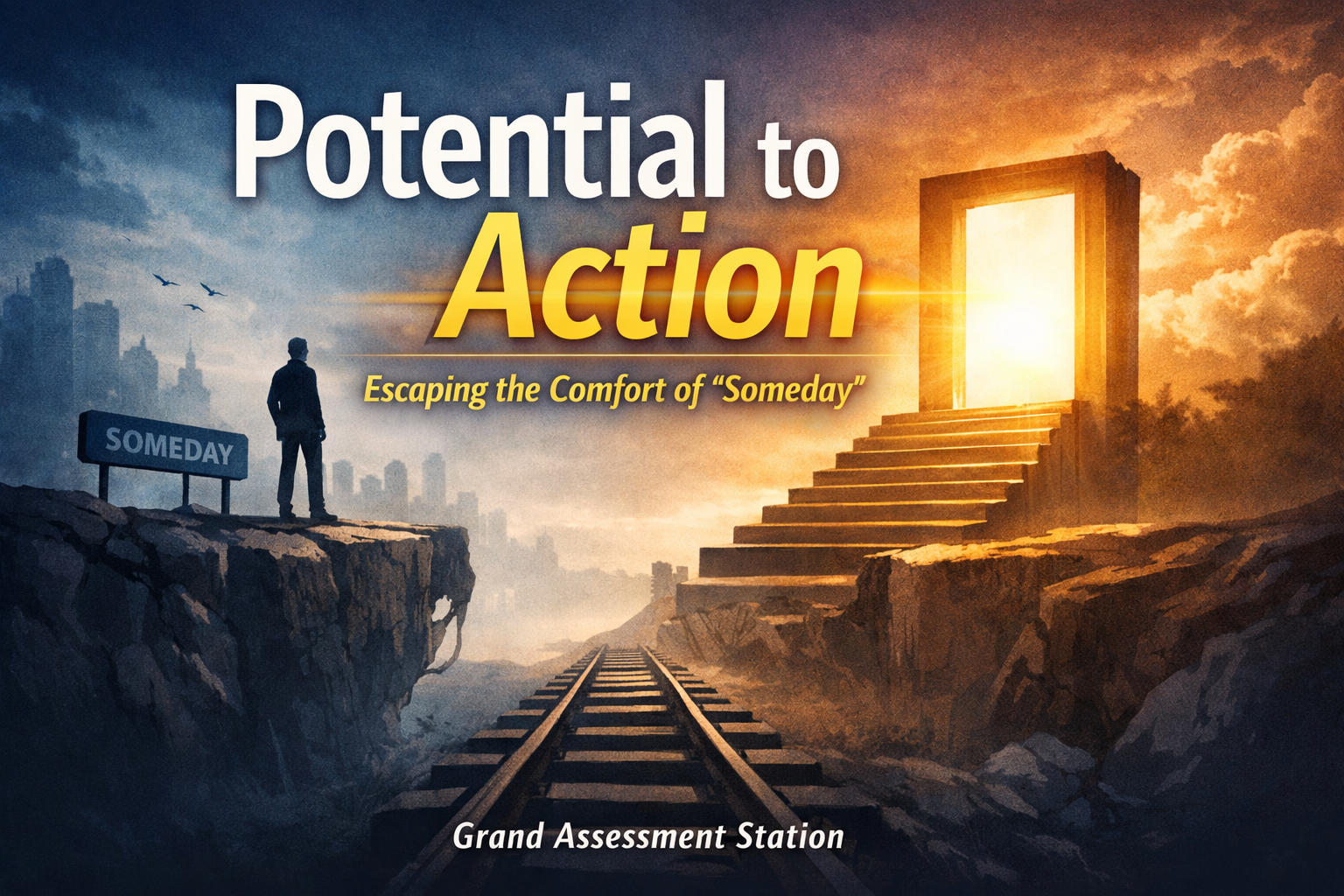

Potential to Action explores the gap between what people could do and what they consistently do. Many individuals have talent, ambition, and opportunity, yet get stuck in patterns like waiting to feel ready, over-planning, perfectionism, or “someday” thinking. Over time, these patterns can turn potential into a quiet burden.
This assessment identifies the psychological and behavioral factors that determine whether potential becomes progress. Rather than measuring motivation or ability, it focuses on readiness myths, identity patterns, action habits, and the systems that either support or prevent momentum.
The Digital Distraction: Awareness and Detox Strategies Assessment is designed to help individuals evaluate their understanding of digital distraction, recognize its impact on their personal and professional lives, and identify practical strategies for regaining control of their attention. Through 12 categories organized into three major dimensions—Awareness, Performance, and Trajectory—the assessment examines digital habits, attention management, communication practices, device boundaries, digital organization, and approaches to sustainable digital wellness. An optional thirteenth category addresses personal accountability and self-regulation.
Assess. Reflect. Apply. Reclaim your attention and make technology work for you.
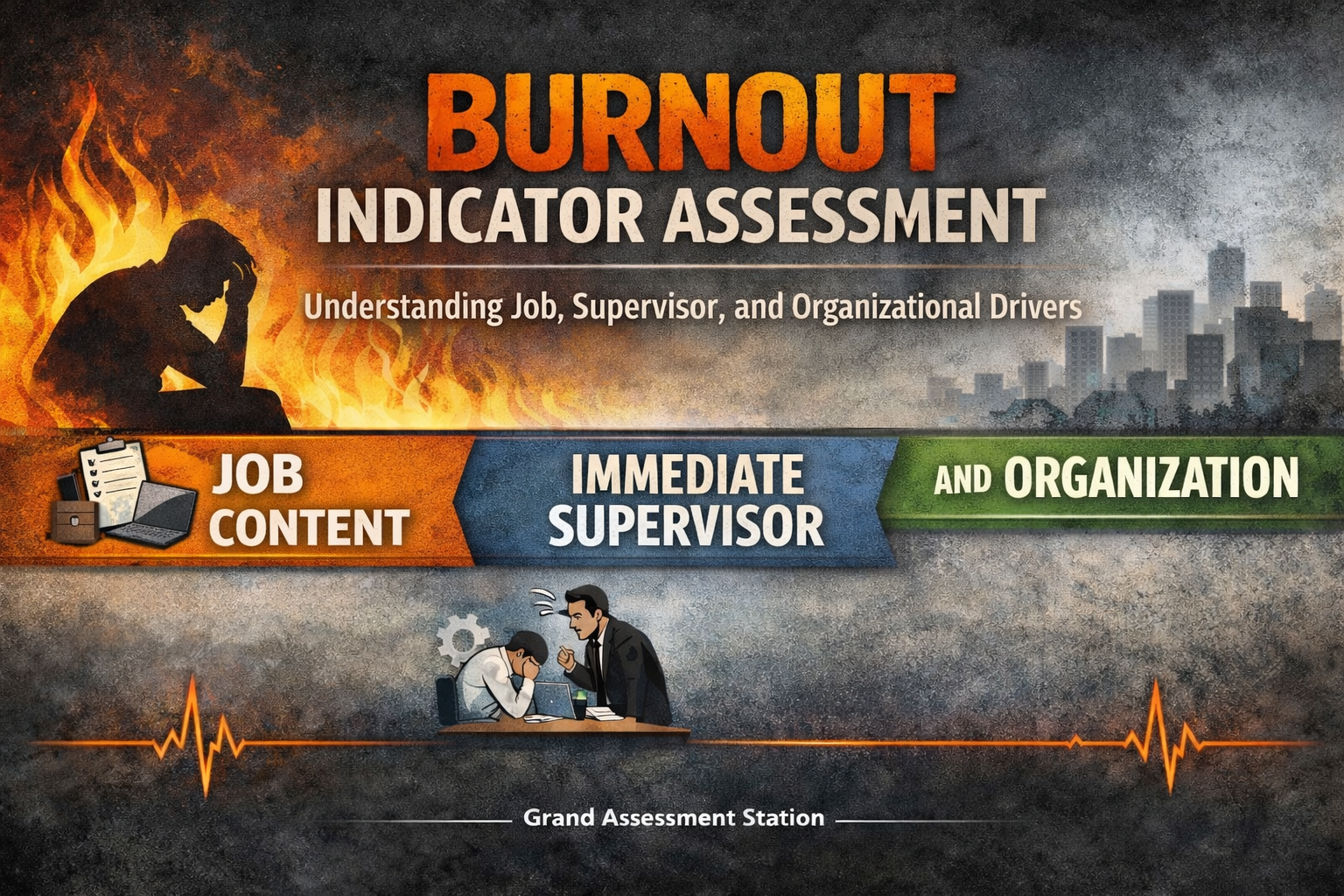
The Burnout Indicator Assessment is designed to help individuals better understand the workplace factors that contribute to job satisfaction, personal fulfillment, and the potential for burnout. Rather than focusing solely on stress or exhaustion, this assessment examines three important dimensions of the work experience: Job Content, Immediate Supervisor, and Organization. These interconnected factors influence how individuals perceive their work, the support they receive, and the environment in which they perform their responsibilities.
Participants evaluate their perceptions of meaningful work, motivation, autonomy, supervisory relationships, communication, organizational leadership, policies, and opportunities for growth. The assessment provides individual scores for each of the three categories, along with a composite score reflecting overall workplace fulfillment and potential burnout risk.
The goal is not simply to identify burnout, but to recognize the conditions that may contribute to it—and discover opportunities to create a more satisfying, meaningful, and sustainable work experience.